
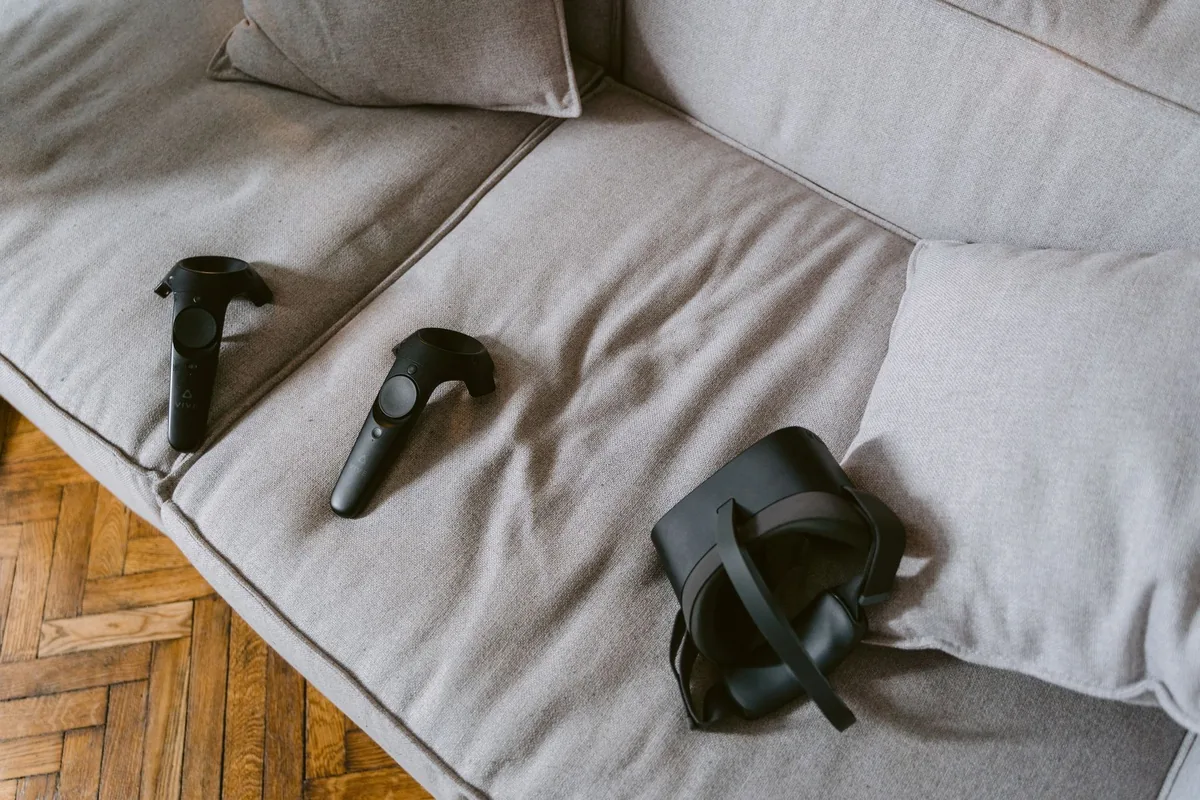
Virtual reality can feel magical for the first ten minutes and miserable for the next ten. Motion sickness is still the most common reason people give up on a headset, but it is not a fixed trait: most players can reduce it a lot with the right settings and habits.
Why your body protests
Your inner ear senses that you are sitting still while your eyes report that you are running, turning or flying. The brain reads that mismatch as a warning sign, and nausea is the result. Low frame rates, lag between head movement and image, and artificial camera movement all make the conflict stronger.
Settings that help most
- Teleport movement instead of smooth walking removes most of the mismatch.
- Snap turning in fixed steps is easier on the stomach than smooth rotation.
- Comfort vignettes narrow your view during movement and are worth keeping on at first.
- Correct lens distance and IPD settings reduce eye strain, which often comes before nausea.
Build tolerance slowly
Short sessions of fifteen to twenty minutes, repeated over a couple of weeks, let most people adapt. Stop at the first sign of discomfort rather than pushing through, and keep a fan blowing gently towards you; the airflow gives your body a stable reference point.
What to play between sessions
On days when the headset feels like too much, flat-screen games give your senses a rest while keeping the hobby going. Seated VR titles, rhythm games and puzzle experiences are gentle options, and some players simply switch to something lighter, such as slot games on a phone, for a few minutes before bed. If real money is involved, keep it to small amounts you have decided in advance and remember it is entertainment for adults only.
With sensible settings and a gradual start, most players find that VR stops being a test of endurance and becomes what it should be: an experience worth putting the headset on for.